
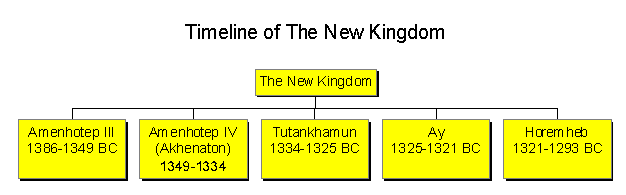
| Tutankhamun, born in about 1343 B.C., was probably a son of the
famous pharaoh Akhenaton by a minor wife. His probable brother or half
brother, Smenkhkara, was chosen by Akhenaton in about 1336 B.C. as
co-regent and heir apparent, a position to which he was entitled through
his marriage to his half-sister, Meritaton, the eldest surviving daughter
of Akhenaton and Nafertiti. The death of both kings some two years later
resulted in the accession of Tutankhaton, as Tutankhamun was then called,
when he was about nine years old and married to Ankhesenpaaton,
Meritaton's younger sister.
Akhenaton had imposed on his subjects a monotheistic creed, proclaiming Aton, the god in the sun's disk, the only god. He had also built a capital at Amarna to replace Thebes and had introduced a new style in art. Opposition to his innovations, already apparent before his death, led Tutankhaton, in about the third year of his reign, to reopen the temples of the older gods, which Akhenaton had closed, to restore the capital to Thebes (Luxor), and to signify the return to favor of the former state god Amun by changing his own name to Tutankhamun and his wife's to Ankhesenamun. He died at the age of about nineteen in about 1325 B. C. * |
| *Tutankhamun: His Tomb and Its Treasures, I.E.S. Edwards, The Metroplitan Museium of Art & Alfred A. Knopf, Inc. New York, 1978 |