|
Examining Good Instructional Design - continued
Step 2: Reviewing the Instructional Design Process
To be successful, projects need to be designed with the end in mind and organized around
important concepts (Wiggins & McTighe, 2005). Planned activities should help your learners meet the intended learning outcomes and assessment standards.
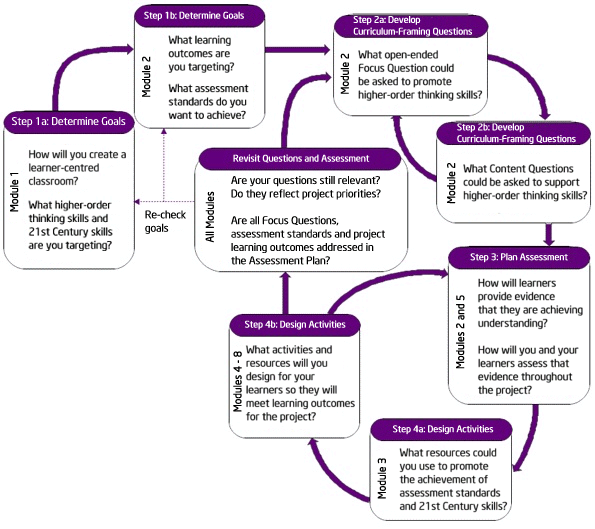
During this course, you develop a Project Portfolio by completing the following steps:
- Determine specific learning goals from assessment standards and 21st Century skills.
- Develop Curriculum-Framing Questions to help learners focus on important themes, concepts and thinking skills.
- Make an assessment plan that demonstrates learner-centred, ongoing, and
reflective assessments.
- Design activities that meet the learners' needs of the learners, connect to the world outside of the classroom, and incorporate the use of ICT.
Project planning is not linear; it always involves circling back to previous steps to ensure alignment among components of your project as shown in the following graphic.
The use of Curriculum-Framing Questions and the resulting activities should all work
together to support the learning goals and targeted assessment standards of the project. Throughout your project, you should incorporate multiple opportunities for assessment and monitoring to measure your learners' progress. Consider this planning process as you answer the following questions and identify goals for yourself in the following table:
- Which steps do you know the most about?
- Which areas do you need to learn more about?
Click here to open the Project Planning Steps table.
 Classroom Tip: Ask learners to set goals at the beginning of projects to help them think about the areas they would like to focus their learning. Classroom Tip: Ask learners to set goals at the beginning of projects to help them think about the areas they would like to focus their learning.
Step 3: Reviewing the Portfolio Rubric
Review the criteria outlined in the Portfolio Rubric to understand expectations for your Project Portfolio.
- Click here to view the Portfolio Rubric. Use this rubric as you create your Portfolio to keep track of the course expectations.
- Highlight areas of the rubric that relate to the goals that you identified in Step 2.
- Now that you have reviewed the planning process, revisit your initial goal(s) from Activity 1 and edit if necessary.
|

