The 24 January 2020, marks the second International Day of Education. The United Nations General Assembly adopted this day in 2018 as a means to focus attention on the role of Education in achieving Peace and Sustainable Development. The International Day of Education is firmly rooted in the Sustainable Development Goal 4 which aims to “ensure inclusive and equitable quality education and promote lifelong learning opportunities for all”.
It is globally believed that digital skills and the use of digital technologies for learning can contribute to closing the various gaps in Education. Through access to digital infrastructure, connectivity, digital curriculum resources, and digital learning, we will be better equipped to achieve quality education for all.
With the conversation of #4IR on the tip of our tongues, educational technologies have the affordance and potential of addressing many educational inadequacies. On this International Day of Education, we celebrate SchoolNet South Africa and its contribution over the past twenty-three years to provide professional development and support to teachers, learners, senior leadership in schools, education officials, and digital skills to out of school youth and communities in under-served areas throughout the country.
 We know first-hand that professional development opportunities in South Africa are deeply varied and currently are displayed in different forms; it can be limited to attending meetings and conferences, advocacy around new ideas, or as is the case in many instances, is a one-size fits all training session that dulls the brain and crushes the soul with impractical methods that are not easily implementable in the classroom.
Research has shown and our practice depicts that professional development should engage teachers and school administrators as learners themselves, and accompany them on the path as they grow, both personally and as professionals, to do their jobs even better, and make a positive difference in the lives of children so that they can achieve their full potential.
For more information about our work and partners, please feel free to browse our website and follow us on Instagram and Twitter using our @SchoolNetSA handles. You can also stay up to date with all the latest developments in ICT in Education in South Africa, by following our Facebook page.
#InternationalDayOfEducation #educationday #schoolnetsa
 Elukhanyisweni Secondary School, situated in the Amathole District of the Eastern Cape, is one of the schools participating in the Commonwealth of Learning Teacher Futures programme. The programme aims to support teachers in developing digital skills and creating communities of practice so that they can provide better teaching and learning opportunities for rural learners.
Whilst Elukhanyisweni had computers and received a donation of tablets from MTN, the school has been burgled a number of times and a ...
Elukhanyisweni Secondary School, situated in the Amathole District of the Eastern Cape, is one of the schools participating in the Commonwealth of Learning Teacher Futures programme. The programme aims to support teachers in developing digital skills and creating communities of practice so that they can provide better teaching and learning opportunities for rural learners.
Whilst Elukhanyisweni had computers and received a donation of tablets from MTN, the school has been burgled a number of times and a ... SchoolNet SA has been working with teachers and school leaders from ten schools in the Amathole District in the Eastern Cape as part of the Commonwealth of Learning Teacher Futures programme. Teacher Futures strives to develop teaching and learning communities of practice (COP) for the purpose of scaling up in-service teachers’ digital knowledge and skills and to assist them in providing quality and sustainable education in the Eastern Cape schools.
With these goal in mind, teachers from the part...
SchoolNet SA has been working with teachers and school leaders from ten schools in the Amathole District in the Eastern Cape as part of the Commonwealth of Learning Teacher Futures programme. Teacher Futures strives to develop teaching and learning communities of practice (COP) for the purpose of scaling up in-service teachers’ digital knowledge and skills and to assist them in providing quality and sustainable education in the Eastern Cape schools.
With these goal in mind, teachers from the part...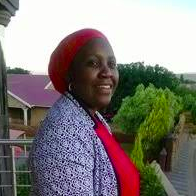 The SchoolNet SA Digital Learning conference attracted almost 500 teachers who enjoyed three days of networking and learning new skills and tools for utilizing digital resources in their classrooms. We often wonder what ideas teachers implement after they have attended a conference; whether they pursue any conference connections; and the extent to which they share what they have learnt with colleagues.
We were delighted to hear from Agnes Rasesemola, the principal of Sunrise View Secondary in Rustenbur...
The SchoolNet SA Digital Learning conference attracted almost 500 teachers who enjoyed three days of networking and learning new skills and tools for utilizing digital resources in their classrooms. We often wonder what ideas teachers implement after they have attended a conference; whether they pursue any conference connections; and the extent to which they share what they have learnt with colleagues.
We were delighted to hear from Agnes Rasesemola, the principal of Sunrise View Secondary in Rustenbur... Ten teachers have been selected as finalists in the Internet Service Providers Association’s (ISPA) SuperTeacher Competition based on a project or lesson that showcases their skills in using digital tools to enhance classroom teaching.
Anel Flack
The following finalists, representing six different provinces, will travel to Johannesburg to be part of iWeek, the Internet industry conference and exhibition which is taking place at the Indaba hotel from 26 – 28 August 2019:
Louise Fu...
Ten teachers have been selected as finalists in the Internet Service Providers Association’s (ISPA) SuperTeacher Competition based on a project or lesson that showcases their skills in using digital tools to enhance classroom teaching.
Anel Flack
The following finalists, representing six different provinces, will travel to Johannesburg to be part of iWeek, the Internet industry conference and exhibition which is taking place at the Indaba hotel from 26 – 28 August 2019:
Louise Fu... SchoolNet SA is currently running a Commonwealth of Learning Teachers Future project in conjunction with the University of Fort Hare. The programme is aimed at
developing digital learning among 10 schools in the Amatole District of the
Eastern Cape. The schools are in the
same district as the University of Fort Hare where lecturers in the Faculty of
Education are also participating in the Teacher Futures Programme with the
intention of improving their digital learning expertise.
T...
SchoolNet SA is currently running a Commonwealth of Learning Teachers Future project in conjunction with the University of Fort Hare. The programme is aimed at
developing digital learning among 10 schools in the Amatole District of the
Eastern Cape. The schools are in the
same district as the University of Fort Hare where lecturers in the Faculty of
Education are also participating in the Teacher Futures Programme with the
intention of improving their digital learning expertise.
T... If you haven’t already done so, please enter your IT learners with a flair for programming in the Programming Olympiad, taking place between 29 July and 2 August 2019. It is designed to challenge learners who can use a programming language like Scratch, Python, Java, C++ or Delphi. Whilst individual learners can enter, entire classes are encouraged to take part.
How does the Programming Olympiad work?
In the first round of the challenge, participants have to solve a number of problems usin...
If you haven’t already done so, please enter your IT learners with a flair for programming in the Programming Olympiad, taking place between 29 July and 2 August 2019. It is designed to challenge learners who can use a programming language like Scratch, Python, Java, C++ or Delphi. Whilst individual learners can enter, entire classes are encouraged to take part.
How does the Programming Olympiad work?
In the first round of the challenge, participants have to solve a number of problems usin... The Royal Bafokeng Institute and the Lebone II College, in partnership with NorthWest Department of Basic Education, hosted the SchoolNet SA 2019 Digital Learning Conference between 26 and 28 June 2019. Four hundred and sixty eight delegates attended the conference, including teachers with a passion for digital learning, ICT coordinators and national and provincial eLearning officials.
Conference attendees enjoyed three days of professional development aligned to the following conference themes: Digita...
The Royal Bafokeng Institute and the Lebone II College, in partnership with NorthWest Department of Basic Education, hosted the SchoolNet SA 2019 Digital Learning Conference between 26 and 28 June 2019. Four hundred and sixty eight delegates attended the conference, including teachers with a passion for digital learning, ICT coordinators and national and provincial eLearning officials.
Conference attendees enjoyed three days of professional development aligned to the following conference themes: Digita... Play is a natural human instinct; where we learn communication, interpersonal skills, emotional control, resiliency and persistence, and even the basics of engineering. Game-based learning (GBL) refers to the use of games or game principles to affect positive learning outcomes. Games can offer an engaging, immersive environment for learners to experiment, try and solve challenges, and collaborate with peers in a virtual world.
Many learners are already playing Minecraft, and more and more teachers are ...
Play is a natural human instinct; where we learn communication, interpersonal skills, emotional control, resiliency and persistence, and even the basics of engineering. Game-based learning (GBL) refers to the use of games or game principles to affect positive learning outcomes. Games can offer an engaging, immersive environment for learners to experiment, try and solve challenges, and collaborate with peers in a virtual world.
Many learners are already playing Minecraft, and more and more teachers are ...